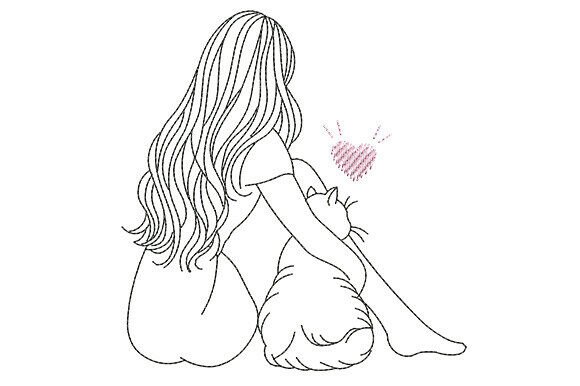
Girl and Cat Lover Embroidery Design
A Quiet Moment That Sells—Why This Minimalist Line-Art Design Fits Craft Fair Realities
As an embroidery designer who’s prepped over 200 craft fair booths—from snowy Vermont pop-ups to sun-drenched Southern markets—I’ll tell you straight: Girl and Cat Lover Embroidery Design lands with soft authority. It’s not loud or flashy. It’s tender, intentional, and instantly legible as “cat person” without cliché. That quiet companionship it promises? That’s exactly what makes it a booth magnet for thoughtful buyers—not just impulse shoppers.
First Impression: Minimal, Modern, and Deeply Relatable
At a glance, Girl and Cat Lover Embroidery Design reads as minimalist line-art—clean, confident, and emotionally warm. It avoids cartoonishness or cluttered detail, which means it feels premium on handmade product displays. No forced whimsy. No dated motifs. Just two figures in gentle proximity: human and feline, grounded in shared stillness. That resonance is gold for cat lovers who want authenticity—not kitsch.
Where It Shines: Product-by-Product Reality Check
- Tote bag design: Perfect as a centered chest placement (8–10" wide). The clean lines hold up beautifully on canvas or medium-weight linen—no bleeding, no visual fatigue. Customers pause longer at totes featuring this design than at busier alternatives.
- Apron embroidery: Ideal above the pocket or along the waistband. Its simplicity reads clearly from across the aisle, even when your booth is three deep with shoppers.
- Tea towel embroidery: Works best on lighter weaves (cotton waffle or flour-sack). Avoid dense terry textures—the line-art relies on crisp contrast, not coverage.
- Embroidered patch: A top-tier choice. Small-scale versions retain charm and clarity at 3–4". Great for pinboards, denim jackets, or gift tags.
- Caps & curved surfaces: Proceed with caution. The design’s balance depends on smooth, stable fabric. Test stitch density on scrap baseball caps before committing—tight curves can distort fine line connections.
- Fabric pouches & pillow covers: Strong performers. The design scales elegantly down to 2.5" or up to 12", keeping proportion and emotional tone intact.
- Printable mockup & Etsy listing: Photographs exceptionally well—especially against muted backdrops (oatmeal linen, slate gray, warm white). Pair it with natural light and a single sprig of dried lavender for scroll-stopping Etsy thumbnails.
What Makes It Booth-Ready—and What Needs Careful Use
This machine embroidery design succeeds because it’s intuitive at every level: customers understand it in under two seconds; makers can reproduce it consistently; and it elevates perceived value without demanding premium pricing.
But don’t skip the practical checks. As a working designer, I’ve seen this line-art lose its grace on dark fabrics unless thread contrast is dialed in early. Light gray or ecru thread on navy cotton? Gorgeous—if tested. Unchecked? Faint, forgettable.
Also watch for: tiny connecting strokes between figure and cat (may vanish below 2.75"), dense stitch areas where line weight thickens unexpectedly, and subtle spacing that tightens on textured towels. Always verify hoop size compatibility—some versions may require 5x7" minimum. If your embroidery file doesn’t specify, assume you’ll need to resize thoughtfully, not just scale.
Design Assets That Build Trust—and Repeat Sales
When customers see Girl and Cat Lover Embroidery Design stitched cleanly on a market bag beside a matching embroidered tea towel and a small patch tucked into the seam, they’re not just buying items—they’re investing in cohesion. That consistency tells them: *This maker pays attention. This brand understands me.*
For Etsy sellers and small shop owners, that coherence multiplies conversion. One satisfied buyer returns for the pillow cover, then the apron, then the holiday gift set—all anchored by the same quiet, confident motif.
Production Notes Every Embroidery Designer Should Run Before Booth Day
- Test the digital embroidery file on scrap fabric matching your final product—same weight, same weave, same dye lot.
- Confirm thread colors visually, not just on screen. Natural light changes everything.
- Review spacing and stitch density in your editing software—look for overlapping jumps or unintended fill where line-art should stay open.
- Match stabilizer to fabric texture: cutaway for knits, tear-away for stable wovens, fusible for lightweight linens.
- Create at least one real-world mockup—stitched, pressed, and styled—not just a digital preview.
- Compare how the design reads on light vs. dark fabric swatches side-by-side.
- Verify commercial licensing status before selling finished product. If unclear, contact the designer or marketplace directly—don’t assume.
Final Thought: This Isn’t Just Another Cat Design—It’s a Connection Point
In a sea of paw prints and “Crazy Cat Lady” slogans, Girl and Cat Lover Embroidery Design offers something rarer: dignity, calm, and recognition. It speaks to the quiet joy of being known—and knowing a cat. That emotional precision is why it converts at craft fairs, performs on Etsy, and earns repeat love in handmade homes.
Use it well—test, refine, pair intentionally—and it won’t just fill your booth table. It’ll fill your customer’s heart, and your next craft fair sales report.