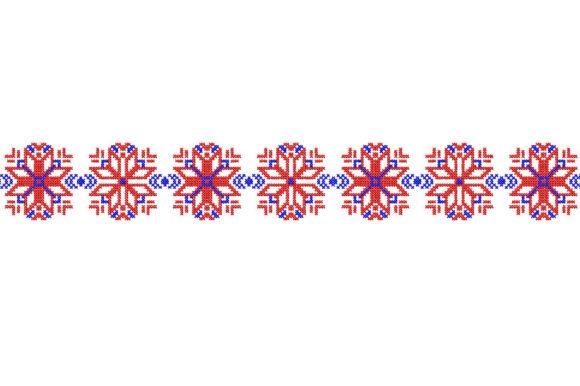
Ethnic Border Embroidery Design
A Designer’s Real-World Review for Small Business Merchandise
As an embroidery designer who’s developed hundreds of commercial designs for cafés, boutiques, florists, bakeries, and handmade brands, I approached the Ethnic Border Embroidery Design with both curiosity and scrutiny—not just as a decorative border, but as a functional brand asset. The title alone signals intention: “Ethnic Border” suggests cultural resonance and visual rhythm; “Embroidery Design” confirms it’s built for machine execution, not just illustration. And that description—“delightful digital border cross stitch design… adorned with striking traditional Slavic folklore motifs”—immediately sets expectations: this isn’t minimalist or trend-chasing. It’s warm, narrative-driven, and intentionally handmade in spirit.
First Impression: Rustic Charm Meets Professional Craft
The Ethnic Border Embroidery Design feels authentically handmade product—but never amateurish. Its Slavic folklore motifs bring folk-art sincerity: interwoven vines, stylized birds, geometric repeats, and symbolic flourishes that read as timeless rather than dated. Visually, it strikes a rare balance: rustic enough to feel personal and grounded, yet structured enough to hold up across diverse applications—from a linen apron at a neighborhood bakery to a woven label on a small-batch soap line. It leans classic and elegant, not playful or bold—making it ideal for businesses that value authenticity over flash, and craftsmanship over clutter.
Where It Shines in Real Business Use
This machine embroidery design excels where continuity and subtle branding matter most:
- Embroidered patch: Perfect as a sew-on or iron-on chest patch for staff uniforms—especially for creative studios, florists, or artisanal shops wanting to signal care and heritage without overt logos.
- Apron embroidery: Works beautifully along the hem or pocket edge of cotton or linen aprons, reinforcing brand identity through texture and tradition.
- Cap embroidery: When scaled thoughtfully (more on sizing below), it adds distinctive character to the back strap or side panel—ideal for pop-up markets or local events.
- Tote bag design: A single repeat or symmetrical segment anchors canvas or jute tote bags with quiet confidence—no need for slogans when the motif tells the story.
- Product packaging accents: Stitched onto fabric tags, twine-wrapped jars, or reusable gift wraps, it elevates perceived value and supports handmade positioning.
- Custom apparel: On sleeve cuffs, collar bands, or shirt plackets, it delivers cohesion across team wear—think baristas in matching tees or florists in coordinated smocks.
For Etsy sellers and craft-based brands, the Ethnic Border Embroidery Design is especially powerful in printable mockup presentations—it reads well in lifestyle photos, communicates artisan values instantly, and pairs seamlessly with neutral palettes and natural materials.
Where to Apply Caution—Not Limitation
Like any thoughtful digital embroidery file, this design demands context-aware application. Because it carries detailed folklore motifs, certain constraints apply:
- Small patch sizes (<5 cm width): Fine linework and tight repeats may blur or lose definition—always test stitch-out at intended scale before bulk production.
- Cap fronts: Avoid placing the full repeat on curved front panels unless digitized specifically for that shape; opt instead for a centered motif segment or side placement.
- Textured fabric (e.g., heavy burlap, nubby linen): High stitch density in dense areas may pucker or lift—pair with cutaway stabilizer and reduce top tension slightly.
- Dark uniforms: Traditional Slavic palettes often rely on contrast—verify thread colors translate clearly on charcoal, navy, or black garments. Test in black-and-white first.
- Frequent washing: While cross-stitch motifs are inherently durable, tightly packed satin stitches (if present in floral elements) benefit from secure underlay and quality threads—confirm stitch density aligns with garment care needs.
How It Strengthens Brand Identity—Beyond Aesthetics
The Ethnic Border Embroidery Design doesn’t just decorate—it communicates. For small businesses, that’s strategic. Its folkloric roots subtly suggest legacy, care, and human-scale making—traits customers increasingly seek in local and handmade brands. Unlike generic vector borders, this design builds trust through cultural specificity and artisanal nuance. When repeated across aprons, patches, and tote bags, it creates visual consistency without repetition fatigue. And because it avoids words or initials, it invites interpretation—deepening customer engagement while remaining flexible across product lines.
Used alongside a simple wordmark or icon, it forms a cohesive system of design assets. It says: “We honor craft. We’re rooted. We pay attention to detail.” That perception directly lifts perceived product value—and justifies premium pricing for hand-finished goods.
Practical Notes Every Embroidery Designer Should Confirm
Before committing to production—whether for your own shop or a client’s small business merch—run these checks:
- Test the embroidery file in black and white to assess contrast and clarity without color distraction.
- Verify legibility at your smallest intended use case—especially for embroidered patch or cap applications.
- Review thread color recommendations against your brand palette; adjust if needed for contrast on dark or light fabrics.
- Inspect spacing between motifs—tight repeats must allow for fabric stretch and needle clearance.
- Confirm compatible hoop size; borders often require larger hoops for smooth hooping and minimal re-hooping.
- Stitch a sample on your target fabric with appropriate stabilizer—fabric texture changes everything.
- Create a printable mockup for client sign-off before digitizing adjustments or bulk runs.
- Compare the Ethnic Border Embroidery Design beside existing logos, icons, or patterns to ensure harmony—not competition—in your visual system.
- Double-check commercial licensing terms—this is essential for commercial embroidery and resale of finished products.
Remember: the strength of any border lies not in isolation—but in how it frames, supports, and elevates what’s within. Used intentionally, the Ethnic Border Embroidery Design does exactly that—for brands that believe in meaning, material, and the quiet power of a well-placed stitch.