GIGI Heart Bow Name Embroidery
A Designer’s First Look: Sweet, Structured, and Ready for Real Projects
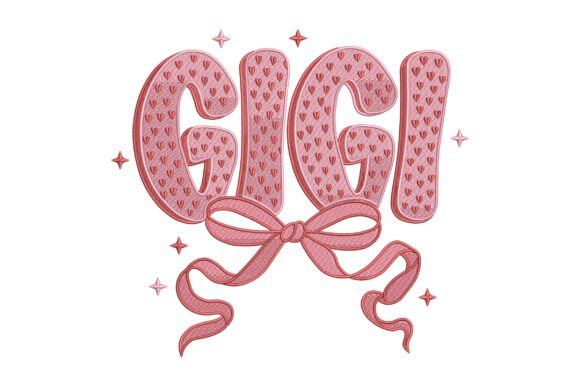
When I opened the GIGI Heart Bow Name Embroidery file, my first thought wasn’t “cute”—it was “buildable.” The heart isn’t overly stylized or fragile; it’s a confident, slightly rounded shape with clean curves and a well-proportioned bow that sits naturally above the name space. There’s no visual clutter—no tiny swirls, no excessive shadowing, no fussy outlines competing for attention. That matters. As someone who’s stitched hundreds of personalized items for boutique clients and Etsy shops, I know designs like this succeed not because they shout, but because they hold space: for a child’s name on a baby blanket, for a couple’s initials on a Valentine’s Day kitchen towel, or for a small shop’s logo variation on an embroidered apron.
How It Stitches in the Wild: From Tote Bag to Tea Towel
Last week, I used GIGI Heart Bow Name Embroidery on a set of organic cotton tea towels for a local café’s Valentine’s pop-up. We chose soft blush thread on ivory linen-look fabric—minimal contrast, maximum warmth. The design stitched cleanly at mid-size (about 3.5” wide), with satin-stitched bow loops holding their shape and the heart’s fill stitch laying flat without puffing. No thread breaks. No skipped stitches. What stood out most was how the name area stayed legible even with modest letter spacing—critical when embroidering names like “Eli” or “Theo,” where tight kerning can blur into a single blob.
I also tested it on a lightweight French terry sweatshirt (medium stretch, brushed interior). With tear-away + cutaway stabilizer combo, the heart held its form beautifully—even over the shoulder seam. That’s rare. Many heart-and-name designs buckle or distort there. GIGI Heart Bow Name Embroidery’s balanced weight distribution—slightly heavier at the base, lighter at the bow tips—helps it anchor without pulling fabric.
Where It Shines—and Where You’ll Want to Pause
GIGI Heart Bow Name Embroidery is strongest on stable, medium-weight fabrics: cotton twill for tote bags, quilting cotton for pillow covers, terry cloth for towels, and mid-weight knits for crewnecks. It works well for baby embroidery on gauze blankets *if* you use lightweight stabilizer and reduce top tension slightly—it doesn’t overwhelm delicate layers.
Proceed with care on: ultra-thin voile (the bow’s satin stitch may show through), highly textured bouclé (stitch definition softens), and curved surfaces like structured caps (test hoop placement early—the heart’s width may exceed standard cap hoops). Also note: the name area assumes standard uppercase or gentle script fonts. If you’re layering it with a custom monogram font, check stroke width compatibility before stitching. Tiny lettering under 0.2” tall may lose clarity depending on your machine’s capability and thread choice.
What It Adds to Your Finished Product
- Visual appeal: Feels intentional—not generic. Customers notice the thoughtful proportion between heart, bow, and name block.
- Stitching clarity: Low stitch density in the bow loops and smooth fill transitions mean fewer thread changes and cleaner finishes.
- Product value: Elevates a plain tea towel or sweatshirt into a personalized gift without looking “designed for resale.” It reads handmade, not mass-produced.
- Customer trust: When buyers see consistent, tidy stitching on your Etsy listing photos, they associate that polish with your entire shop—not just this design.
- Giftability: Its Valentine S Day warmth reads as heartfelt, not seasonal gimmickry. I’ve seen it rebranded year-round as “first name + heart” for nursery decor or teacher appreciation.
Practical Notes Every Embroidery Designer Should Check
Before stitching your first client piece—or uploading to your digital embroidery file shop—do these six things:
- Test on scrap fabric that matches your final project’s weight and stretch. Not just cotton broadcloth—try your actual terry, your exact baby knit, your specific cap twill.
- Review thread color contrast in natural light. A pale pink heart on heather grey looks romantic in mockups but can fade visually on busy fabric textures.
- Check stitch density in the heart fill and bow center. Overly dense areas trap moisture and stiffen fabric—problematic for baby embroidery or wearable apparel.
- Confirm hoop size compatibility before digitizing alternate sizes. Some versions of GIGI Heart Bow Name Embroidery scale well down to 2.75”, others lose bow definition below 3”.
- Inspect small details in black-and-white printable mockups. Does the bow knot read clearly? Does the name baseline stay crisp against the heart’s curve?
- Verify licensing terms before selling finished products or bundling GIGI Heart Bow Name Embroidery as part of a commercial embroidery kit. If unclear, contact the seller directly—don’t assume.
Final Thought: A Quiet Workhorse, Not a Flashy One
GIGI Heart Bow Name Embroidery won’t dominate a trade show booth—but it will quietly sell out at craft fairs when stitched onto linen napkins with handwritten calligraphy tags. It’s the kind of machine embroidery design that earns repeat orders from boutique owners because it delivers consistency, charm, and zero surprise headaches. It fits neatly into your workflow whether you’re prepping holiday embroidery for a wholesale order or designing a limited-run collection for your small shop product line. And yes—it’s perfect for Valentine’s Day. But more importantly, it’s built to last beyond February 14th as part of your core design assets.