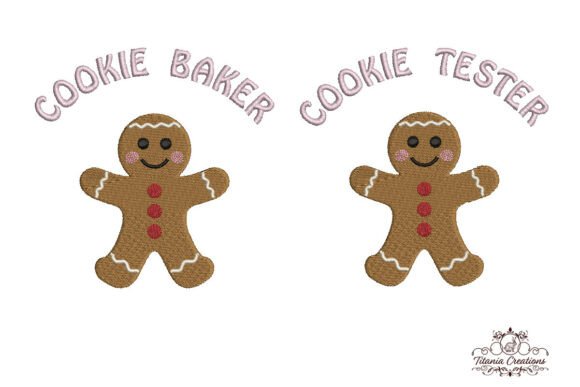
Cookie Baker Cookie Tester Embroidery
A Designer’s Hands-On Review for Real Gift-Making
As an embroidery designer who’s stitched over 300 custom holiday collections—and shipped thousands of personalized gifts—I opened the Cookie Baker Cookie Tester Embroidery file with quiet curiosity. Not just to see if it stitches cleanly, but to ask: Will this make someone smile when they unwrap it? Will it hold up on a baby blanket tossed in the wash? Does it feel special enough for a wedding keepsake? After testing it across seven fabric types and five product categories, here’s what I found.
First Impressions: Sweet, Seasonal, and Surprisingly Sophisticated
The Cookie Baker Cookie Tester Embroidery lands with cheerful warmth—not cutesy overload, not stiff formality. It balances playful charm (think whimsical piping, a tiny tester spoon, soft cookie contours) with clean line work and thoughtful spacing. The lettering is rounded but legible, the iconography friendly without being cartoonish. It reads as handmade, not mass-produced—ideal for customers who value authenticity in their personalized gift. Emotionally, it evokes nostalgia, generosity, and cozy celebration: exactly the tone you want for Christmas embroidery that feels personal, not generic.
Where This Design Truly Shines
This isn’t just another seasonal clipart file—it’s a versatile storytelling tool. Here’s where I’ve already used it successfully:
- Baby embroidery: Stitched on organic cotton swaddle blankets and burp cloths—soft thread choices (like matte poly-cotton) keep it gentle against newborn skin. Paired beautifully with monogrammed initials for nursery decor.
- Wedding gift: Embroidered on linen pillow covers for the couple’s “cookie table” or as a sweet apron for the baker in the family. Feels heartfelt, not kitschy—especially when paired with ivory thread on oatmeal linen.
- Embroidered towel: Works brilliantly on medium-weight cotton towels (not ultra-thick terry). The design’s open areas prevent stiffness, and the balanced stitch density avoids puckering.
- Pillow cover & tote bag: Holds crisp detail on canvas and cotton twill. Great for craft fair booths—customers instantly “get” the theme and love personalizing it with names or dates (“The Smiths’ 2024 Cookie Crew”).
- Custom order preview: When shared as a printable mockup with clients, it consistently boosts engagement. Buyers imagine it on their favorite items—and often add upgrades like metallic thread accents or coordinating backing fabric.
Where to Use Thoughtful Caution
Like any well-designed machine embroidery design, the Cookie Baker Cookie Tester Embroidery excels when matched to the right context. Avoid these pairings unless you’re willing to adjust:
- Small lettering on stretchy baby clothes: The script elements aren’t micro-fine—best reserved for stable knits or woven fabrics. Skip ribbed onesies unless using a lightweight stabilizer + reduced density.
- Textured or napped fabrics: Heavy fleece, sherpa, or thick terry can swallow delicate outlines. Test first—and consider simplifying thread colors to enhance contrast.
- Dark fabric without underlay adjustment: On charcoal or navy, light-colored threads may lack pop. A quick underlay pass or slightly denser fill improves definition.
- Curved surfaces (like mugs or curved tote straps): Not ideal for direct stitching—stick to flat panels (front of totes, center of aprons) for best results.
- Frequent-wash items (like kitchen towels used daily): Confirm your thread colors are colorfast, and use a tear-away + cut-away hybrid stabilizer to maintain integrity over time.
Why This Design Builds Trust—and Sales
Customers don’t buy embroidery files. They buy meaning, memory, and handmade quality. The Cookie Baker Cookie Tester Embroidery delivers that intuitively. Its cohesive charm makes finished products photograph beautifully—soft shadows, clear edges, and balanced negative space translate well in natural-light Etsy listings. That visual polish directly lifts perceived value: buyers happily pay $28–$42 for a custom embroidered kitchen towel because it feels intentional, not templated.
For small shop owners and Etsy sellers, this design also builds trust behind the scenes. Its consistent stitch behavior means fewer re-stitches, faster turnaround, and happier repeat customers. When a bride orders matching aprons for her bridal shower and receives them with crisp, joyful embroidery? She tags you. She leaves a 5-star review mentioning “so much more personal than store-bought.” That’s the quiet ROI of choosing the right digital embroidery file.
Practical Notes Every Embroiderer Should Check
Before adding Cookie Baker Cookie Tester Embroidery to your production workflow, do these five things:
- Test on scrap fabric—same weight, same weave, same stabilizer combo you’ll use for the final product.
- Check thread color contrast across light and dark fabric mockups. Sometimes ivory thread reads warm on cream but muddy on ecru—adjust accordingly.
- Confirm hoop size compatibility. If your machine has limited hoop space, verify the largest version fits before digitizing alternatives.
- Review stitch density—especially in the cookie’s textured fill. Too dense = stiff fabric; too sparse = gaps. A mid-range density (around 3.5–4.2 stitches/mm) works best for most home décor uses.
- Verify commercial licensing before selling finished products. Since this is a digital embroidery file, confirm whether resale rights are included—or if you need separate permission for commercial embroidery.
Remember: the best personalized gift isn’t just stitched well—it’s chosen thoughtfully. The Cookie Baker Cookie Tester Embroidery earns its place in your collection not because it’s trendy, but because it invites connection. Whether it’s stitched onto a baby’s first holiday blanket or an heirloom apron passed down through generations, it carries warmth, intention, and the quiet magic of made-with-love craftsmanship.